POLYTECHNIC INSTITUTE
In 1963, the Faculty of Agricultural Mechanization was founded, marking the beginning of today’s Polytechnic Institute.
The primary goal of the Faculty of Agricultural Mechanization was to train highly qualified specialists in agricultural mechanization for four regions of Western Kazakhstan — Uralsk, Aktobe, Guryev, and Kyzylorda.
The first dean of the faculty was Kenzhegulov Khairulla Kenzhegulovich, Candidate of Mathematical Sciences and Associate Professor. Khairulla Kenzhegulovich made a great contribution to the development of the educational process at the faculty as an initiative leader, a qualified teacher, and an organizer of higher education. Under his leadership, the engineering and teaching staff was formed, new departments were established, and classrooms and specialized laboratories were equipped.
In 1965, the position of dean was assigned to Kulpin Pavel Ivanovich, Candidate of Technical Sciences, who created favorable conditions for the creative work of both teachers and students.
In the early years, the faculty included the following departments: Physics (headed by Shumsky Ya. E.), Higher Mathematics (Kenzhegulov Kh. K.), General Technical Disciplines (Sagnaev Kh. S.), and Agricultural Mechanization (Mitsenko A. A.). Later, these departments were divided, merged, and reorganized into new ones.
Teachers and students of the faculty conducted classes in specialized disciplines. The experimental installations, equipment, and laboratory instruments created during those years later became the foundation for equipping a workshop for the repair of educational and experimental farm machinery.
In 1969, Dzhubaev Sergey Shugaevich was appointed dean of the faculty. He was one of the organizers of the faculty’s relocation to a new student campus.
Since 1977, the faculty has been headed by Bentzler Yuri Yakovlevich. Alongside his administrative duties, Yuri Yakovlevich was actively engaged in scientific research. Under his direct leadership, the faculty became one of the first in the institute to organize a movement for collective responsibility in studies, discipline, daily life, and socially useful work. The introduction of the collective agreement principle into the educational process became an experimental initiative of the university administration in its search for new approaches to organizing the learning process.
By 1983, the faculty had 10 specialized departments employing 88 teachers, including 30 Candidates of Sciences. The faculty included departments such as “Tractors and Automobiles,” “Agricultural Transport,” “Repair and Operation of Transport and Tractor Fleet,” “Occupational Safety and Industrial Training,” “Mechanization of Livestock Farms,” and others.
From 1987 to 1993, the dean of the faculty was Abdrakhmanov Andesh Bekitzhanovich, a graduate of the Leningrad Shipbuilding Institute.
From 1993 to 1999, the faculty was headed by Murzagaliev Akhmet Zhakiyevich.
From 2000 to 2020, the faculty was led by Candidates of Sciences — Bentzler Yuri Yakovlevich, Dzhaparov Ranil Raphatovich, Kusainov Rakhmetulla Kusainovich, Shirvanov Rashid Bolatovich, Aytaliyev Ermek Satpayevich, and Bakushev Askar Asylgalievich.
In September 2019, the Polytechnic Faculty was reorganized into the Polytechnic Institute.
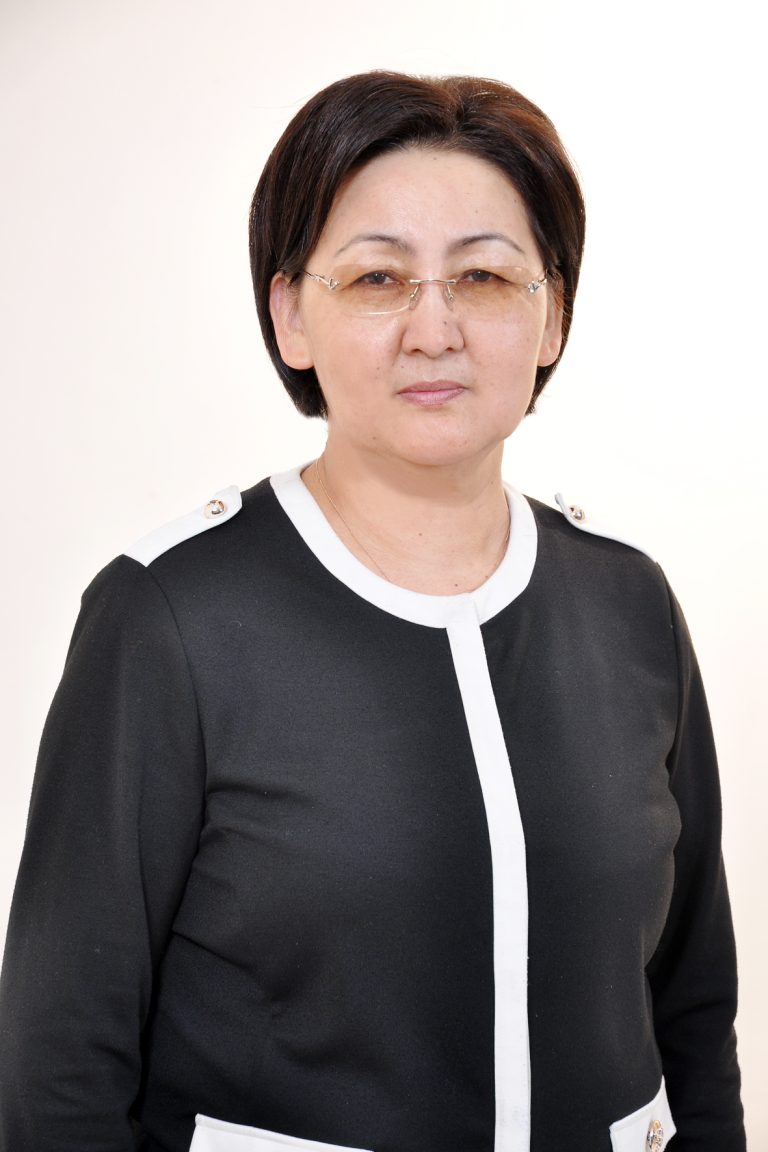
Since March 2020, the institute has been headed by Kubasheva Zhanna Kairzhanovna, Candidate of Technical Sciences and Associate Professor.
Previously, the Polytechnic Institute included the Center for General Technical Training, as well as the Higher Schools of “Engineering and Technical Safety” and “Electrical Engineering and Automation.” In March 2024, due to structural changes at the university, the responsibilities of the heads of the higher schools were transferred to the deputy directors of the institute.
In September 2024, the Polytechnic Institute incorporated educational programs previously belonging to the Industrial-Technological and Agro-Technological Institutes: “Machinery for Extractive Industries,” “Mechanical Engineering,” “Mechatronics,” “Robotic Systems,” and “Standardization, Certification, and Metrology.”
Currently, the institute trains specialists in 18 educational programs of higher and postgraduate education.
The institute’s faculty deliver lectures and conduct laboratory and practical classes for students of all technical specializations. Among them are Doctors of Technical Sciences — Aytaliyev E. S., Nuralin B. N.; Candidates of Sciences — Davletyarov A. Sh., Makhmudova Sh. Zh., Tulegenova D. K., Kubasheva Zh. K., Dzhanaliev E. M., Dusenov M. K., Sarbalina B. D., Khayrullina S. G., Dzhaparova D. A., Saifutdinova G. S.; PhD holders — Sarsenov A. E., Ibraev A. S., Yerbayev E. T., Kuspanova A. M., Dzhaparov R. Sh., Zhumagalieva G. B., as well as young researchers — Masters of Technical and Pedagogical Sciences, who actively participate in academic and teaching activities and continue the traditions of their mentors with dignity.
Over the past five years, Saifutdinova G. S., Zhumagalieva G. B., and Sarbalina B. D. have successfully defended their Candidate of Science dissertations. Currently, four teachers are pursuing postgraduate studies in the Russian Federation. The institute regularly sends young teachers to advanced training courses at leading universities in Kazakhstan and abroad (the USA, the Republic of Belarus, and Russia). Three teachers have completed internships abroad under the “Bolashak” international scholarship program to exchange scientific and pedagogical experience.
The educational process actively employs interactive teaching methods: multimedia tools, internet resources, electronic textbooks, learning and testing software, as well as audio and video materials.
The quality of teaching is monitored by the institute’s educational and methodological bureau through peer class attendance, open lessons, and subsequent discussions at institute meetings.
To combine theoretical education with practical training, some practical classes in specialized disciplines are held at the production facilities of leading enterprises in the city.
In September 2023, the Design Bureau was established at the institute, and it continues its active work today.
Students of the institute undergo industrial internships at enterprises such as “West Kazakhstan REC” LLP, “Transformer Plant” LLP, “KEGOC” JSC, “UralskAgroRemMash” JSC, “Zenit” Plant, “Hydropribor” Research Institute, “Zhayyk Zhylu Kuat” JSC, “Uralsk Poultry Farm” LLP, and others.
The Board of Trustees, chaired by Azhgaliev A. K., a 1980 graduate, is actively operating at the institute. The members of the Board of Trustees have carried out significant landscaping work on the institute’s premises: a student park was built, benches were installed, and blue spruces were planted. As a sign of gratitude to the teachers, a Gallery of Educators was established in the institute’s building. At present, work is underway to create an open-air Museum of Agricultural Machinery.